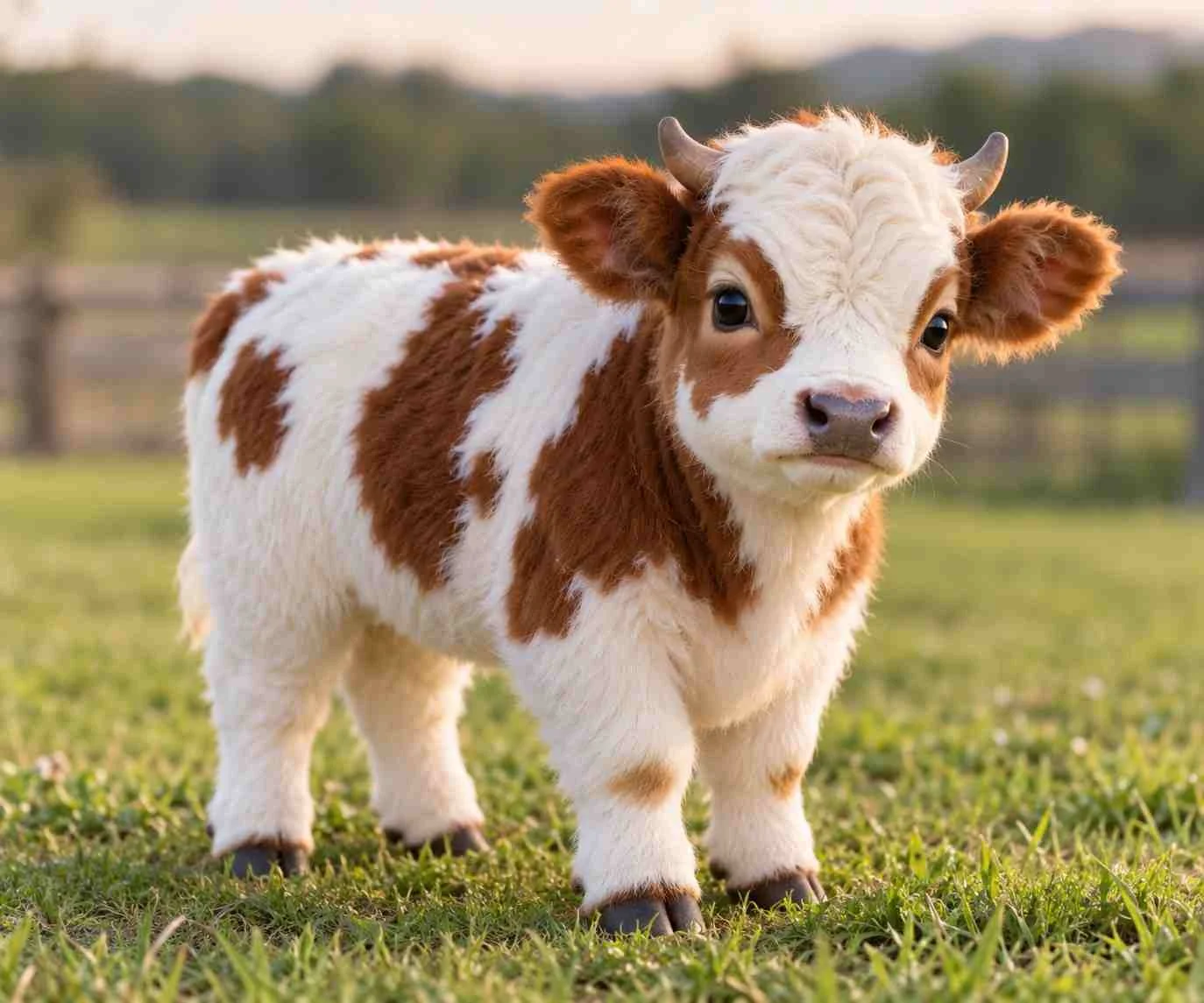
A mini cow is a smaller type of cattle that is often popular with small-farm owners, hobby farmers, and people interested in miniature livestock. If you’re considering keeping one as a companion animal, learn more about having a mini cow as pet and the space involved. However, mini cow is not the name of one specific breed. The term covers several cattle types, including Mini Highland cows, Dexter cattle, Miniature Zebu, and Miniature Hereford cattle. Each type has its own appearance, breed background, body structure, and mature size.
What Is a Mini Cow?
A mini cow is generally a smaller-than-average cow or a member of a miniature cattle type. The term is widely used in livestock advertising and everyday conversation, but it does not describe one universal breed. Mini cows can differ in coat color, horn shape, body proportions, and mature measurements. For example, Mini Highland cows are known for their long, shaggy coats, while Miniature Zebu cattle have a distinctive hump over their shoulders. Dexter cattle have a compact build and a recognized breed identity. Some miniature cattle have established breed standards or registry guidelines. Other animals are advertised using terms such as mini, micro mini, or teacup. These labels can mean different things to different sellers, so they should not be treated as official measurements.

What Are the Different Types of Mini Cows?
Several cattle types are associated with miniature livestock. Although they may all be described as mini cows, they are not identical. Some miniature cattle have distinct breed backgrounds and physical characteristics. For example, Dexter mini cattle are known for their compact build and recognized Irish breed heritage, making them different from Mini Highland cows and Miniature Zebu cattle.
| Mini Cow Type | Appearance | Main Distinction |
| Mini Highland cow | Long, shaggy coat and characteristic horns | Known for its distinctive Highland appearance |
| Dexter cattle | Compact body and generally short coat | Recognized cattle breed originating in Ireland |
| Miniature Zebu | Short coat and a noticeable shoulder hump | Belongs to the Zebu group of cattle |
| Miniature Hereford | Commonly red with a white face | Smaller cattle developed from Hereford breeding |
| Lowline cattle | Compact, muscular body | Developed from Australian Angus cattle |

Mini Highland Cow
Mini Highland cows are among the most recognizable types of mini cows because of their long hair, broad foreheads, and distinctive horns. Their appearance comes from the Highland cattle background, a breed associated with the Scottish Highlands. Traditional Highland cattle have a double coat consisting of a long outer layer and a softer undercoat. Their coat colors can include red, black, yellow, white, dun, brindle, and silver. The term Mini Highland is commonly used for smaller Highland-type cattle. However, it does not have one universally accepted mature-size standard that applies to every animal sold under that label. Individual animals can differ in height, weight, and body structure. Mini Highland cattle are often featured in miniature-livestock discussions because of their distinctive appearance. Their shaggy coats make them easy to distinguish from many other small cattle types. Explore fluffy teacup mini cow for more information and adorable miniature-cattle inspiration
Dexter Cattle
Dexter cattle are a recognized cattle breed originating in Ireland. They are known for their compact body, relatively short legs, and practical livestock background. Unlike Highland cattle, Dexter cattle generally have a shorter coat that lies closer to the body. Common breed colors include black, red, and dun. Dexter cattle may be horned or naturally polled, meaning they are born without horns. Dexters have traditionally been used for beef, milk, and draft work. Their compact size has also made them familiar in discussions about smaller cattle and small farms. Dexter cattle and Mini Highland cows should not be treated as the same type of animal. They have different breed backgrounds, coats, and physical characteristics, even though both may be advertised or discussed as small cattle.
Miniature Zebu
Miniature Zebu cattle are another type of small cattle. They belong to the Zebu group, which has historical roots in South Asia.
Their most distinctive physical feature is the hump over the shoulders. They generally have short, sleek hair and a more refined appearance than the long-haired Highland type. Miniature Zebu cattle come in different colors, and individual animals can vary in body proportions and mature size. Their breed background is associated with tropical environments, and Zebu cattle are known for characteristics related to adaptation to warmer climates. This makes Miniature Zebu visually different from Mini Highland cattle. A shaggy coat and broad Highland forehead are characteristic of the Highland look, while the shoulder hump and short coat are defining features of Zebu cattle. Although both may be described as mini cows, their histories and physical features are different.
How Big Is a Mini Cow?
There is no single height or weight that applies to every mini cow. Mature size depends on the cattle type, breeding background, sex, and individual animal.
Some miniature cattle are described using height measurements, while other advertisements focus on weight. The measurement method matters because height can be measured at the shoulder or at the hip. Those measurements are not identical, so figures from different sources may not be directly comparable.
Mini Highland cattle, Dexter cattle, and Miniature Zebu cattle should not be assumed to share one universal size range. Even within the same type, individual animals may grow to different heights and weights.
The word mini also does not guarantee that a calf will remain exceptionally small as an adult. An animal’s expected mature size depends on its background and the characteristics of its parents, along with individual variation.
When comparing miniature cattle, it is more accurate to look at documented measurements and the animal’s background than to rely on a marketing label alone.
What Does “Micro Mini Cow” Mean?
The terms mini, micro mini, teacup, and miniature are frequently used in advertisements for small cattle. However, these labels do not automatically represent separate, universally standardized breeds.
A seller may use micro mini to describe cattle expected to be especially small, but the term alone does not establish an animal’s mature height or weight. Different sellers may use these descriptions differently.
It is also important to distinguish an animal’s current size from its expected adult size. A young calf will naturally be smaller than a mature cow, so a calf’s size does not establish how large it will become.
The cattle type, age, parentage, and documented measurements provide more meaningful information than a label such as micro mini or teacup.
For this reason, miniature-cattle terminology should be interpreted carefully rather than assumed to have the same meaning across every advertisement or breeder.
What Colors Do Mini Cows Come In?
Mini cows come in a wide variety of coat colors because the term includes several different cattle types.
Highland cattle can have red, black, yellow, white, dun, brindle, and silver coats. Dexter cattle are commonly associated with black, red, and dun. Miniature Zebu cattle also appear in different colors and patterns, while Miniature Hereford cattle are known for their red bodies and white faces.
Coat color can help distinguish some cattle types, but color alone does not prove an animal’s breed or size. Different breeds can share similar colors, and individual animals within a type may have different markings.
The overall appearance—including coat texture, body structure, horns, and other physical features—provides a fuller picture than color alone.
Do Mini Cows Have Horns?
Some mini cows have horns, while others are naturally polled or come from cattle lines in which horn status varies.
Traditional Highland cattle are characteristically horned. Their horns contribute to their distinctive appearance, with differences in shape between males and females.
Dexter cattle may be horned or naturally polled. Miniature Zebu cattle can also vary in horn status.
As a result, there is no universal rule that applies to all mini cows. Horns depend on the cattle type and individual animal. The general label mini cow is not enough to determine whether a particular animal has horns.
How Much Does a Mini Cow Cost?
Mini cow prices can vary considerably. There is no single price that applies to every miniature cattle type or every animal. If you’re planning to bring one of these animals home, understanding the cost of buying a mini cow can help you budget for the purchase. Prices vary depending on the cattle type, age, sex, breeding background, registration, and seller.
Several factors can affect an advertised price, including:
- Cattle type: Mini Highland, Dexter, Miniature Zebu, and other cattle may have different market prices.
- Age: Calves, heifers, and mature cattle may be priced differently.
- Sex: Bulls, cows, and heifers can have different asking prices.
- Breeding background: Documented parentage and breeding history may affect an animal’s value.
- Registration: Registered animals may be priced differently from animals without registration.
- Appearance: Coat color, markings, horns, and other features can influence demand.
- Seller and location: Prices can differ between sellers and markets.
Mini Highland cattle are often advertised at premium prices because of demand for their distinctive appearance and smaller-size marketing. Other miniature cattle types may have different pricing patterns.
However, it would be inaccurate to say that every Mini Highland cow costs more than every Dexter or Miniature Zebu. The price of an individual animal depends on its characteristics and the seller’s asking price.
For a meaningful comparison, listings should be compared using similar ages, sexes, registration statuses, and breeding backgrounds.
Mini Cow vs. Regular Cow: What Is the Difference?
The main distinction is that a mini cow is generally described as smaller than typical cattle, but the difference is not limited to height alone. Miniature cattle may belong to recognized breeds or to breeding populations marketed for their smaller size. Their mature measurements, body structure, and appearance can vary according to their type and background. A Mini Highland cow, for example, has the shaggy appearance associated with Highland cattle. A Miniature Zebu has a shoulder hump and short coat, while a Dexter has a compact body and its own recognized breed identity. A mini cow is still cattle. The term does not describe a separate species, and it does not mean that all miniature cattle have the same proportions or characteristics. Understanding the actual cattle type is therefore more useful than treating mini cow and regular cow as two uniform categories.
Are Mini Cows All the Same Breed?
No. Mini cows are not one single breed. The term can refer to different cattle types that are smaller than typical cattle or are marketed as miniature livestock. Some, such as Dexter cattle and Miniature Zebu cattle, have established breed identities. The term Mini Highland is commonly used for smaller Highland-type cattle rather than a separate universally standardized breed.
These differences matter because the animals can have different coat textures, horn shapes, body proportions, histories, and mature measurements.
Two animals may both be advertised as mini cows yet look very different and have different breed backgrounds. Identifying the specific type is the first step toward understanding those differences.
Are Mini Cows Suitable for Small Farms?
Miniature cattle are often discussed in the context of small farms and hobby farms because of their smaller size compared with many larger cattle. However, the term mini cow covers a wide range of animals, so the label alone does not establish how suitable a particular animal is for a specific property.
Different cattle types have different physical characteristics and mature sizes. A smaller animal is not automatically identical to another small animal in its needs or background.
The most accurate way to compare miniature cattle is to consider the individual animal and the characteristics of its specific type rather than assuming all mini cows are alike.
Frequently Asked Questions About Mini Cows
Are mini cows real?
Yes. Smaller cattle and miniature cattle breeds or breeding populations exist. However, mini cow is a broad term that includes multiple types of cattle rather than one single breed with a universal size standard.
What is the smallest type of mini cow?
There is no single answer that applies to every animal sold as a mini cow. Mature size varies by cattle type, breeding background, and individual characteristics. Labels such as micro mini do not, by themselves, guarantee a particular adult height or weight.
Are Mini Highland cows the same as mini cows?
Mini Highland cows are one type of cattle marketed as mini cows, but not all mini cows are Mini Highland cattle. The broader category includes other types, such as Dexter cattle, Miniature Zebu, and Miniature Hereford.
Are Dexter cattle considered mini cows?
Dexter cattle are a compact, recognized cattle breed and are often included in discussions about smaller cattle. However, Dexter cattle have their own breed identity and should not be treated as the same type as Mini Highland cattle.
Why do mini cows come in different sizes?
The term covers different cattle types and breeding backgrounds. Mature size can vary according to the animal’s genetic background and individual characteristics. A general miniature label does not guarantee that every animal will reach the same height or weight.
Are mini cows and miniature cattle the same thing?
The terms are often used similarly in everyday conversation and advertising. Their precise meaning can vary, however, so identifying the cattle type and looking at actual measurements is more informative than relying on the label alone.
Final Thoughts
Mini cows are a broad category of smaller cattle rather than one single breed. Mini Highland cows, Dexter cattle, Miniature Zebu, Miniature Hereford, and Lowline cattle each have distinct appearances and breed backgrounds.
The most important difference is between the general term mini cow and the specific type of cattle being described. Size labels do not establish a universal mature height or weight, and not every miniature animal shares the same physical characteristics.
Understanding the cattle type, appearance, and individual measurements makes it easier to compare miniature cattle accurately and avoid assuming that every animal marketed as a mini cow is the same.