A Dexter mini cow is a popular choice among people researching small cattle breeds. Dexter cattle are known for their compact bodies, relatively short stature, and history as a traditional Irish cattle breed. Their appearance and size make them a frequent topic for people exploring miniature cows, small-farm cattle, and alternatives to larger livestock. Although Dexter cattle are often called mini cows, Dexter is the name of an established cattle breed.
What Is a Dexter Mini Cow?
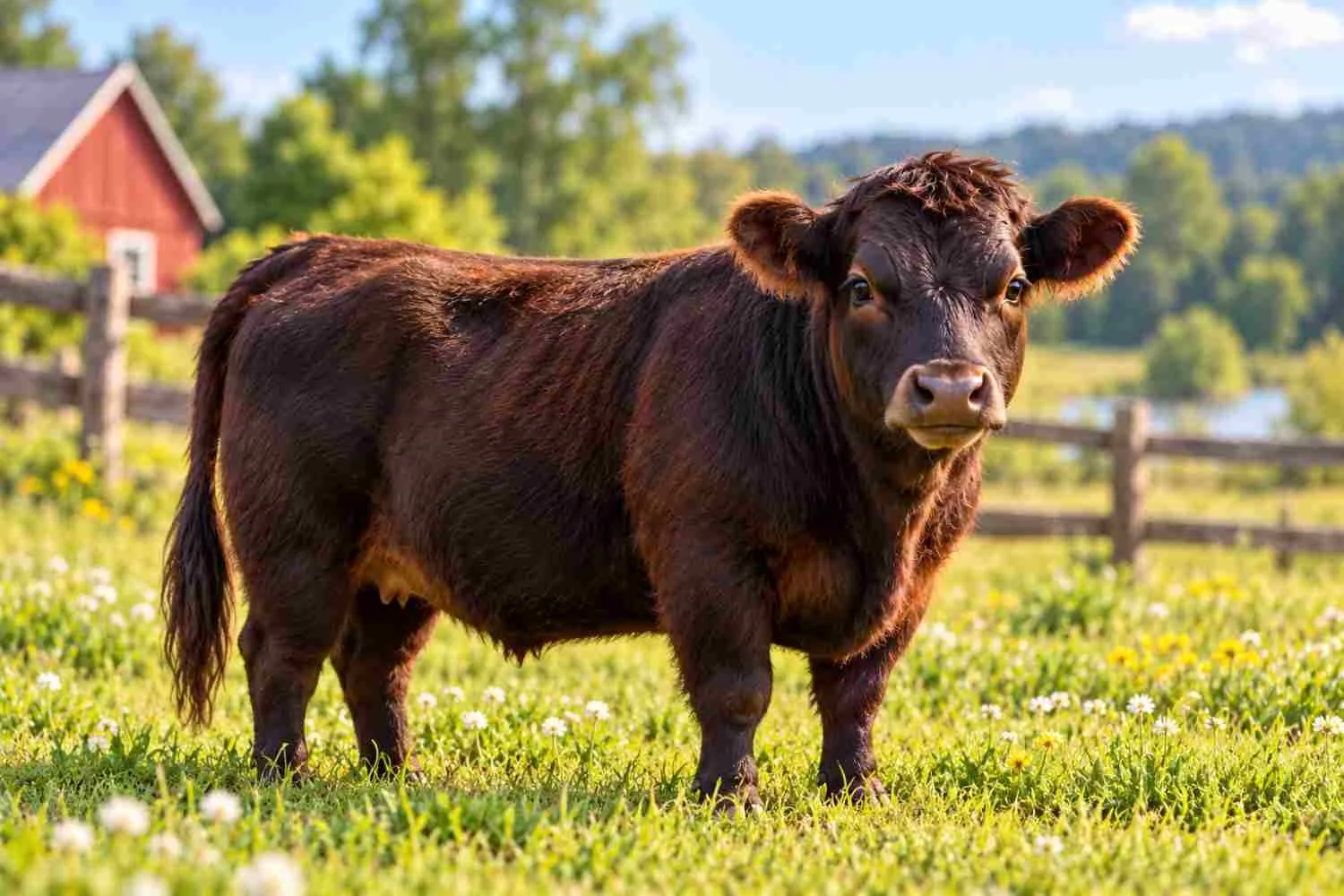
A Dexter mini cow is a Dexter cow described in terms of its relatively small size. Dexter cattle originated in Ireland and became known as a compact, versatile breed with a distinctive appearance. Unlike the general term “mini cow,” which can refer to several breeds and crossbreeds, Dexter identifies a particular cattle breed with established breed characteristics. Dexters are traditionally considered a multipurpose breed. Historically, they were valued for beef, milk, and draft work. Their compact bodies and relatively small stature made them useful in traditional farming settings where larger cattle were not always the preferred option. Today, Dexter cattle attract interest from people researching heritage cattle, small-farm livestock, and naturally small breeds.

Dexter Cattle Breed History
Dexter cattle originated in the Kerry region of southwestern Ireland. Historically, they were associated with small landholders and farming communities in the Irish countryside.
The breed developed in a setting where versatile cattle were valuable. Animals that could serve several traditional agricultural purposes had an important role in farming, and Dexter cattle became known for their multipurpose background.
Dexters were subsequently introduced to the United States, with recorded imports during the early twentieth century. Over time, American breeders established organizations and registration systems to maintain records and define breed characteristics.
The breed remains recognizable for its compact frame, short coat, and traditional cattle appearance.
The Dexter’s history also explains why it is different from some modern miniature cattle. Its relatively small stature is associated with the breed itself, rather than simply being a marketing category applied to an otherwise larger breed.
How Big Is a Dexter Mini Cow?
One of the most common questions about Dexter cattle is how tall they become as adults.
According to the American Dexter Cattle Association, mature Dexter cows typically measure 34–46 inches at the hip, with many falling between 36 and 42 inches. Mature bulls typically measure 36–50 inches at the hip, with many between 38 and 44 inches.
These are typical ranges rather than guarantees for every animal.
Dexter Cow Size Chart
| Measurement | Typical mature height |
| Dexter cow | 34–46 inches at the hip |
| Most Dexter cows | 36–42 inches at the hip |
| Dexter bull | 36–50 inches at the hip |
| Most Dexter bulls | 38–44 inches at the hip |
These measurements refer to height at the hip, not at the shoulder. That distinction matters when comparing Dexter cattle with other breeds whose published measurements use a different reference point.
Dexters can also differ in body proportions. Some have very short legs relative to their bodies, while others are proportionately small throughout their frames.
A photograph or an animal’s age does not provide enough information to determine its final mature height. When comparing individual Dexter cattle, actual measurements and reliable records are more useful than a seller’s general description.
How Much Does a Dexter Cow Weigh?
There is no single weight that applies to every Dexter cow or bull. Weight varies with the animal’s sex, age, frame, and individual characteristics.
A mature bull and a mature cow should not automatically be expected to have the same weight. Young Dexter calves also change substantially as they grow.
When researching Dexter cattle weight, it is useful to distinguish among:
- Dexter calf weight: The weight of a young animal at a particular age.
- Adult cow weight: The mature weight of a female Dexter.
- Adult bull weight: The mature weight of a male Dexter.
- Steer weight: The weight of a castrated male, which depends on age and individual development.
A reliable weight estimate should identify the age and sex of the animal. Numbers from different life stages should not be compared as if they represent the same measurement.
The word “mini” also does not guarantee that a Dexter will remain below a particular weight. The breed has a range of natural variation, and individual animals develop differently.
Dexter Mini Cow Colors
Dexter cattle are recognized in three main colors: black, red, and dun. These colors are part of the breed’s familiar appearance.
Black Dexter Cattle
Black is a common and recognizable Dexter color. Black Dexter cows have a solid dark coat that gives them a traditional cattle appearance.

Red Dexter Cattle
Red Dexters have reddish coats. The shade can vary between individual animals, so not every red Dexter looks exactly the same.
Dun Dexter Cattle
Dun is another recognized Dexter color. It generally describes a muted brownish or gray-brown shade rather than the appearance of a typical black animal.
Small amounts of white may occur in certain areas, such as around the udder or underside. However, extensive white markings and other patterns should be assessed against the applicable breed guidelines when identifying a registered Dexter.
Color alone cannot confirm whether an animal is a purebred Dexter. Breed background and documentation provide more useful evidence than coat color alone.
Do Dexter Mini Cows Have Horns?
Dexter cattle originated as a horned breed. Traditional horned Dexters have medium-sized horns that generally curve upward, with white coloring and darker tips commonly described in breed information.
However, not every Dexter cow has visible horns.
Dexter cattle can be horned, naturally polled, or dehorned. Polled cattle are genetically hornless, while dehorned animals have had their horns removed. These are different situations, even though the resulting appearance may be similar.
This distinction is useful when identifying a Dexter cow. The absence of horns does not automatically mean an animal is not a Dexter.
If horn status is important when comparing individual cattle, check the animal’s background and available records rather than relying on appearance alone.
Dexter Mini Cow Calves
Dexter calves are young members of the Dexter breed. They have the characteristic breed background but have not yet reached their mature size.
A Dexter calf may look especially small beside an adult cow, which can make it appear similar to cattle advertised as micro mini or teacup cows. However, the size of a calf does not establish how tall or heavy it will become as an adult.
What Does a Dexter Calf Look Like?
Dexter calves can have black, red, or dun coats, depending on their genetics. Their bodies and proportions change as they grow, and their adult appearance becomes more apparent with maturity.
Calves from the same breed may also differ in color and individual characteristics. A young animal’s appearance should therefore be considered alongside its age and parentage.
Is a Dexter Calf a Mini Cow?
Dexter calves belong to an established small-statured cattle breed, but “calf” refers to age while “mini cow” describes a general size category.
A calf from a larger cattle breed can also look small when young. For that reason, a photograph of a small calf does not establish that it belongs to a miniature breed.
The animal’s breed identity and expected mature size are the more meaningful details.
How Much Does a Dexter Mini Cow Cost?
The price of a Dexter cow varies according to age, sex, registration, pedigree, location, and the seller’s asking price.
A registered Dexter with documented parentage may be priced differently from an unregistered animal or a crossbred calf. Animals sold for breeding purposes may also have different asking prices from animals sold for other purposes.
There is no single price that accurately describes every Dexter mini cow.
Factors That Affect Dexter Cattle Prices
Age: Calves, yearlings, and mature cattle may have different prices.
Registration: Documented registration and pedigree can affect an animal’s market value.
Sex: Bulls, cows, heifers, and steers may be priced differently.
Breeding background: Parentage and available records can influence how an animal is valued.
Location: Local cattle markets, transport costs, and regional demand can affect asking prices.
Individual characteristics: Appearance, size, and the animal’s intended purpose may also influence its price.
When comparing listings, make sure you are comparing animals of similar age, sex, and registration status. A single advertised price should not be treated as the standard cost of the entire breed.
Dexter Cattle vs. Other Mini Cow Breeds
Miniature cattle differ in their appearance, ancestry, and physical characteristics. Learn more about the zebu mini cow to understand its distinctive shoulder hump, body shape, and how it compares with other small cattle breeds.
Dexter vs. Miniature Zebu
Miniature Zebu cattle have Zebu ancestry and are often recognized by their shoulder hump and distinctive body shape. Dexter cattle have a different ancestry and generally lack the pronounced hump associated with Zebu cattle.
Dexter vs. Miniature Hereford
Miniature Herefords retain the recognizable Hereford appearance, including a red body and white face. Dexter cattle are known for their three main solid colors and compact build.
Dexter vs. Lowline Cattle
Lowline cattle developed from Australian Angus breeding stock. They generally have a short coat and an Angus-like appearance, while Dexter cattle have their own distinct Irish breed history.
These differences illustrate why the phrase “mini cow” should not be treated as a breed name. Two small cattle can have very different ancestry, color patterns, and physical characteristics.
Are Dexter Cattle a True Miniature Breed?
Dexter cattle are often called mini cows because they are relatively small compared with many conventional cattle breeds. However, the American Dexter Cattle Association describes them as a naturally small-statured breed, not a miniature breed created by selecting for increasingly reduced size.
This distinction separates Dexter cattle from some animals marketed as Mini Highland, micro mini, or teacup cattle.
The terms “micro mini” and “teacup” do not have one universally accepted meaning across all livestock sellers. A Dexter should be identified by its breed rather than automatically assigned to a particular commercial size category.
Dexter cattle also have variation within the breed. A buyer should not assume that every individual will reach exactly the same mature height or weight.
Why Are Dexter Cattle Popular With Small-Farm Enthusiasts?
Dexter cattle attract interest because they combine a compact stature with an established breed history. Their recognizable appearance and multipurpose background also make them interesting to people learning about traditional cattle breeds.
For readers comparing small cattle, Dexters offer a useful example of a naturally small-statured breed rather than a general miniature marketing category.
Their popularity in small-farm discussions does not mean that every Dexter is suitable for every property. The animal’s actual mature size, the characteristics of the property, and local requirements all matter when evaluating cattle for a particular setting.
A careful comparison should focus on the individual animal and its breed background rather than relying on the word “mini” alone.
Frequently Asked Questions About Dexter Mini Cows
What is a Dexter mini cow?
A Dexter mini cow is a Dexter cow described as a mini cow because of the breed’s relatively small stature. Dexter is an established cattle breed that originated in Ireland.
How tall is a mature Dexter cow?
The American Dexter Cattle Association gives a typical mature height range of 34–46 inches at the hip for cows, with many between 36 and 42 inches.
What colors do Dexter cattle come in?
The three main Dexter colors are black, red, and dun. Individual shades can vary. Black is also a recognized coat color in Scottish Highland cattle, as explained in our guide to black highland cattle breed.
Are all Dexter cows horned?
No. Dexter cattle can be horned, naturally polled, or dehorned. Horn status varies among individual animals.
Are Dexter cows the same as Mini Highland cows?
No. Dexter cattle are an established Irish breed with a short coat. Mini Highland generally describes Highland-type cattle bred or selected for smaller stature, and they are known for their shaggy coats.
Is Dexter a separate cattle breed?
Yes. Dexter is an established cattle breed with its own history and breed guidelines. It is not simply a generic name for any small cow.
How much does a Dexter mini cow cost?
Prices vary by age, sex, registration, pedigree, location, and seller. There is no single price that applies to every Dexter cow, so comparable current listings provide a better estimate than a general miniature-cow price.
Is a Dexter calf the same as a micro mini cow?
No. Dexter calf describes a young animal of the Dexter breed, while micro mini is a marketing term used for cattle advertised as especially small. A calf’s current size does not determine its final adult dimensions.
Final Thoughts
Dexter mini cows are an interesting option to research if you want to learn about naturally small-statured cattle with a long breed history. Originating in Ireland, Dexter cattle are recognized for their compact bodies, short coats, and black, red, or dun coloring.
Mature Dexter cows typically measure 34–46 inches at the hip, although individual animals vary. The breed also includes horned, polled, and dehorned cattle, so appearance alone does not tell the whole story.
Most importantly, Dexter cattle should be distinguished from the broad marketing categories of mini, micro mini, and teacup cows. Understanding the breed’s identity, adult size, and individual characteristics provides a more accurate picture of what a Dexter mini cow is.