Lets try to find out does mini cow give milk? Yes, female mini cows can produce milk after giving birth, just like other female cattle. Their milk production usually continues for several months, but the exact duration depends on the breed, individual cow, and stage of lactation. Mini cows are not all the same, so there is no single milk-production figure that applies to every miniature cow.
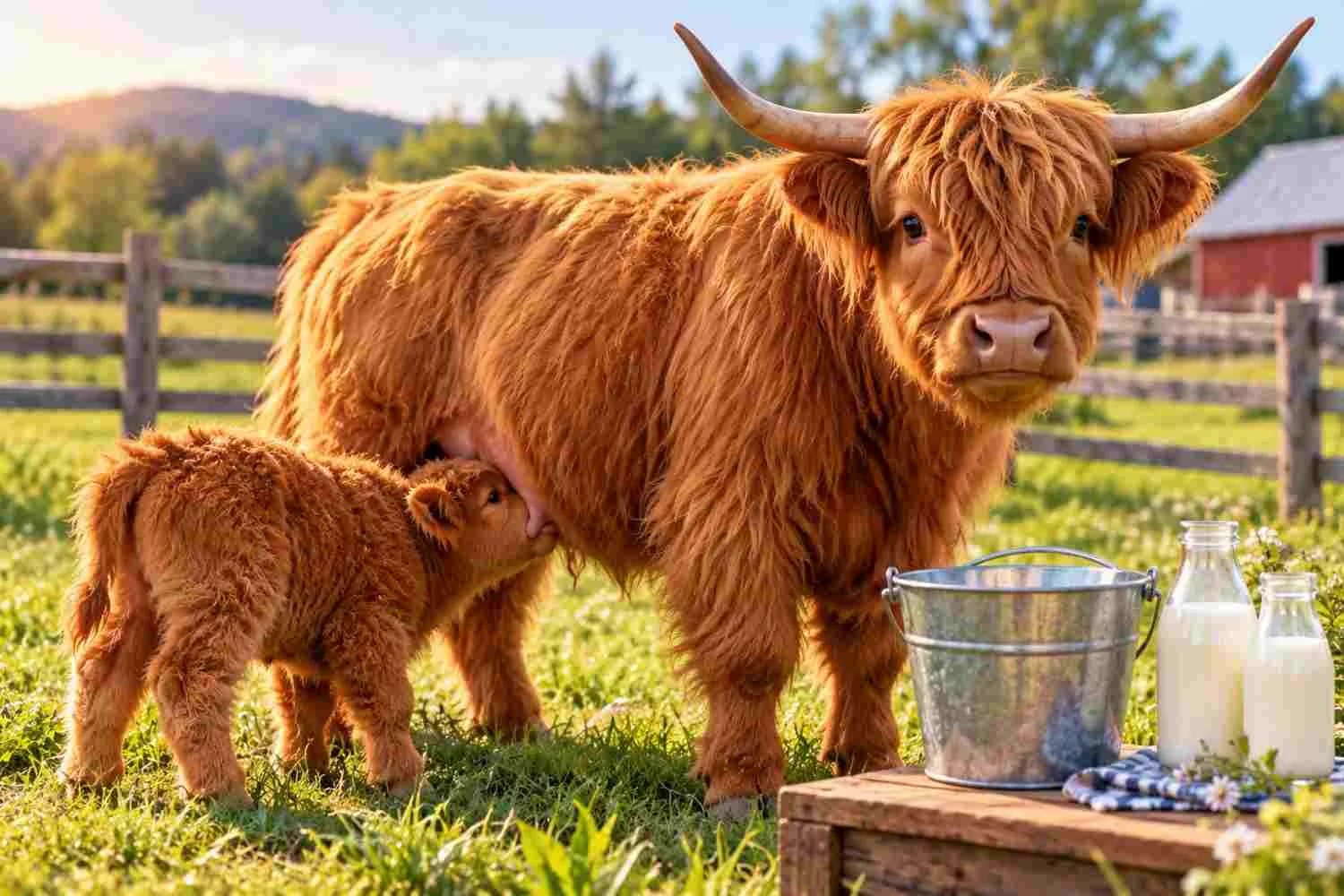
Mini Cow Milk Production Compared With Dairy Cows
| Feature | Mini cows | Specialized dairy cows |
| Main breeding background | Varies by breed and type | Selected primarily for milk production |
| Milk production | Varies considerably by individual | Generally selected for higher production |
| Lactation duration | Depends on breed and individual | Often discussed using a roughly 305-day benchmark |
| Milk available for a household | Depends on total production and calf consumption | Depends on total production and how the milk is allocated |
| One universal production figure? | No | No; production still varies between cows |

Does a Mini Cow Give Milk?
Yes, a female mini cow can produce milk after she gives birth to a calf. Milk production is a natural part of the reproductive cycle in female cattle. However, a mini cow does not automatically produce milk simply because she is female. Milk production is associated with calving, and the amount produced can vary considerably between individual animals. Mini cows also represent several different cattle breeds and types. A Mini Highland cow, Dexter, or Miniature Zebu may differ in size, genetics, and typical production characteristics. As a result, the phrase “mini cow milk production” does not describe one uniform level of output. Another important distinction is that a cow producing milk for her calf is not necessarily producing a large surplus for people. The amount available for household use depends on the individual animal’s total production and how much milk the calf consumes.
Can You Milk a Mini Cow?
Yes, some mini cows can be milked. Whether a particular animal is suitable for milking depends on its individual characteristics and milk production.
People interested in miniature cattle sometimes look for a smaller animal that can provide milk for household use. However, miniature cattle are not automatically dairy animals. Many are bred or kept for other purposes, including their appearance, companionship, or beef production.
Before assuming that a mini cow will provide a particular amount of milk, it is important to distinguish between three things:
- Milk production: The total milk an individual cow produces during lactation.
- Milk consumed by the calf: The portion used by the calf.
- Milk available for people: Any milk remaining for human use, if the cow is being milked.
These amounts are not interchangeable. A cow may produce enough milk to raise her calf without providing the quantity of surplus milk someone expects.
How Long Do Mini Cows Produce Milk?
Mini cows can produce milk for several months after giving birth. However, there is no single lactation duration established for every type of miniature cattle.
For context, conventional dairy-cow lactation is often discussed using a period of approximately 305 days, or about ten months. This is a common dairy-production benchmark, not a guarantee for every cow and not a specific standard for all mini cows. Miniature cattle differ in breed background and production characteristics. Highland cattle, for example, are traditionally associated more with beef production and raising calves than with the high milk yields of specialized dairy breeds. Some Highland-cattle references describe shorter periods of household milking, but those figures should not be treated as a universal rule for every Mini Highland cow. There is not enough standardized information to promise that all mini cows will produce milk for the same number of months.
When Does a Mini Cow Start Producing Milk?
A female mini cow begins producing milk in connection with giving birth. The period following birth is known as lactation.
Before the calf is born, the cow’s body undergoes changes associated with pregnancy and the preparation for milk production. After calving, milk becomes available to feed the newborn calf.
This means that a young female mini cow that has never given birth should not be expected to produce a normal supply of milk simply because she has reached a certain age.
The timing of first milk production depends on the animal’s reproductive development and when she gives birth, rather than on a universal age at which every mini cow starts producing milk.
Do Mini Highland Cows Give Milk?
Yes, female Mini Highland cows can produce milk after calving. Highland cattle have historically been valued for their ability to raise calves, and some owners also milk them for household use. However, Highland cattle are not specialized dairy cattle. Their milk production should not automatically be compared with that of breeds developed specifically for commercial dairy production.
Mini Highland cows are also not a standardized size category with one universal milk yield. Animals described as miniature may differ in their ancestry, mature size, and individual production characteristics.
For someone interested in Mini Highland milk, the key question is not simply whether the cow can produce milk. It is how much milk the particular cow produces and how much, if any, is available beyond what her calf consumes.
Their recognizable shaggy coats and compact appearance may make Mini Highland cows appealing, but appearance alone does not predict milk production.
How Much Milk Does a Mini Cow Produce Per Day?
There is no reliable single daily milk-production figure that applies to all mini cows. Milk output varies according to the animal’s breed, genetics, stage of lactation, and individual characteristics. A miniature cow should not be assumed to produce the same amount as another miniature cow simply because both have the same general label. It is also important to distinguish between peak production and average production over an entire lactation. A cow’s output can change after calving, rise toward a peak, and then gradually decline..
Does a Mini Cow Produce Milk Every Day?
During lactation, a cow can produce milk regularly, but the amount is not necessarily identical every day. Milk production changes over the course of the lactation period. Production generally rises after calving, reaches a peak, and gradually declines. The length and shape of this pattern vary between cows.
A cow’s overall lactation period should also be distinguished from the period during which she is producing milk at a particular level. Continuing to produce some milk does not mean that the cow is maintaining her peak output.
This distinction matters when comparing claims about how long mini cows produce milk. Two cows might both be described as lactating for several months while producing different total quantities.
Do Mini Cows Produce Milk Without Having a Calf?
Under normal circumstances, milk production in cattle is associated with pregnancy and giving birth. A female mini cow that has never calved should not be expected to produce a normal lactation simply because she is female.
Once lactation begins, the cow’s production changes over time. The fact that a cow has produced milk previously also does not mean she will continue producing the same amount indefinitely.
For this reason, a cow’s reproductive history is relevant when considering its milk-producing ability. The label “mini cow” alone does not establish whether an animal is currently lactating or how much milk it can produce.
Is Mini Cow Milk Different From Regular Cow Milk?
Mini cow milk is still cow’s milk. However, its composition can vary according to the animal’s breed, genetics, and stage of lactation.
There is no single milk composition that applies to every miniature cattle breed. A Mini Highland cow, Dexter, and Miniature Zebu should not automatically be assumed to produce milk with identical fat content or other characteristics.
The animal’s small size also does not, by itself, establish that its milk is richer, healthier, or nutritionally superior to milk from standard-sized cattle.
Claims about the taste, cream content, or composition of milk should be tied to evidence about the particular breed or individual animal rather than generalized to all mini cows.
Can All Mini Cow Breeds Be Milked?
Female cattle from several miniature or smaller cattle types can produce milk after calving, but that does not mean every breed is equally suited to milk production.
Mini Highland Cows
Mini Highland cows can produce milk and raise their calves. Highland cattle are traditionally associated with beef production and their ability to thrive in challenging environments rather than with the high yields expected from specialized dairy breeds.
Dexter Cattle
Dexter cattle are a smaller cattle breed with a history of multiple uses. Their milk production can vary between animals, so the breed name alone does not guarantee a particular yield.
Miniature Zebu
Miniature Zebu are another type of small cattle. Their milk-producing ability depends on the individual animal and its background, and claims about production should be evaluated using evidence specific to the animals being discussed.
Across all these types, miniature size does not automatically indicate a specific milk yield or lactation length.
Frequently Asked Questions
How many months does a mini cow give milk?
Mini cows can produce milk for several months after giving birth. The exact duration varies by breed and individual cow. The approximately 305-day lactation benchmark commonly used for dairy cattle should not be treated as a guaranteed duration for every mini cow.
Does a mini cow give milk every year?
A female mini cow may produce milk again after a subsequent calving. Whether and when that happens depends on her reproductive history. Milk production is associated with lactation rather than occurring automatically every calendar year.
Do Mini Highland cows produce enough milk for a family?
Some Mini Highland cows may provide milk beyond what their calves consume, but the amount varies. Highland cattle are not specialized dairy cattle, and there is no universal yield that can be promised for every miniature Highland cow.
Can a mini cow produce milk if she has never had a calf?
Normally, a mini cow’s first natural lactation follows giving birth. Being female or reaching adulthood does not automatically mean she is producing milk.
Does a mini cow stop producing milk after six months?
Not necessarily. Six months is not a universal cutoff for all miniature cattle. The duration depends on the individual cow and her lactation pattern.
Are mini cows better milk producers than regular cows?
Not generally. Miniature cattle are not automatically better milk producers because of their smaller size. Specialized dairy breeds have been selected for milk production, while miniature cattle include animals with varied breed backgrounds and purposes.
Is a Mini Highland cow a dairy cow?
Highland cattle can produce milk, but they are traditionally associated with beef production and raising calves rather than specialized dairy production. A Mini Highland cow’s individual milk output can vary. Learn more about milk production of Mini Highland cow to understand its typical milk yield and how it compares with specialized d
Final Thoughts
Mini cows can produce milk, and female Mini Highland cows can lactate after giving birth. However, the length of lactation and the quantity of milk vary between individual animals and cattle types.
The familiar dairy-cow benchmark of approximately 305 days provides general context, but it should not be presented as a guaranteed duration for every mini cow. Miniature cattle are not one standardized breed, and their milk-producing characteristics differ.
If you are researching mini cows for milk, remember the central distinction: being able to produce milk does not necessarily mean producing a large amount of milk for household use. Breed background, individual production, and the calf’s share all affect what a particular cow can provide.