Why do Highland cows moo? Highland cows moo to communicate with other cattle, call their calves, locate herd members, attract mates, and express needs or distress. Why do Highland cows moo at night? They may be communicating for the same reasons they do during the day, including calling to other cattle or responding to separation. There is no established evidence that Highland cows have a unique nighttime mooing pattern compared with other cattle.
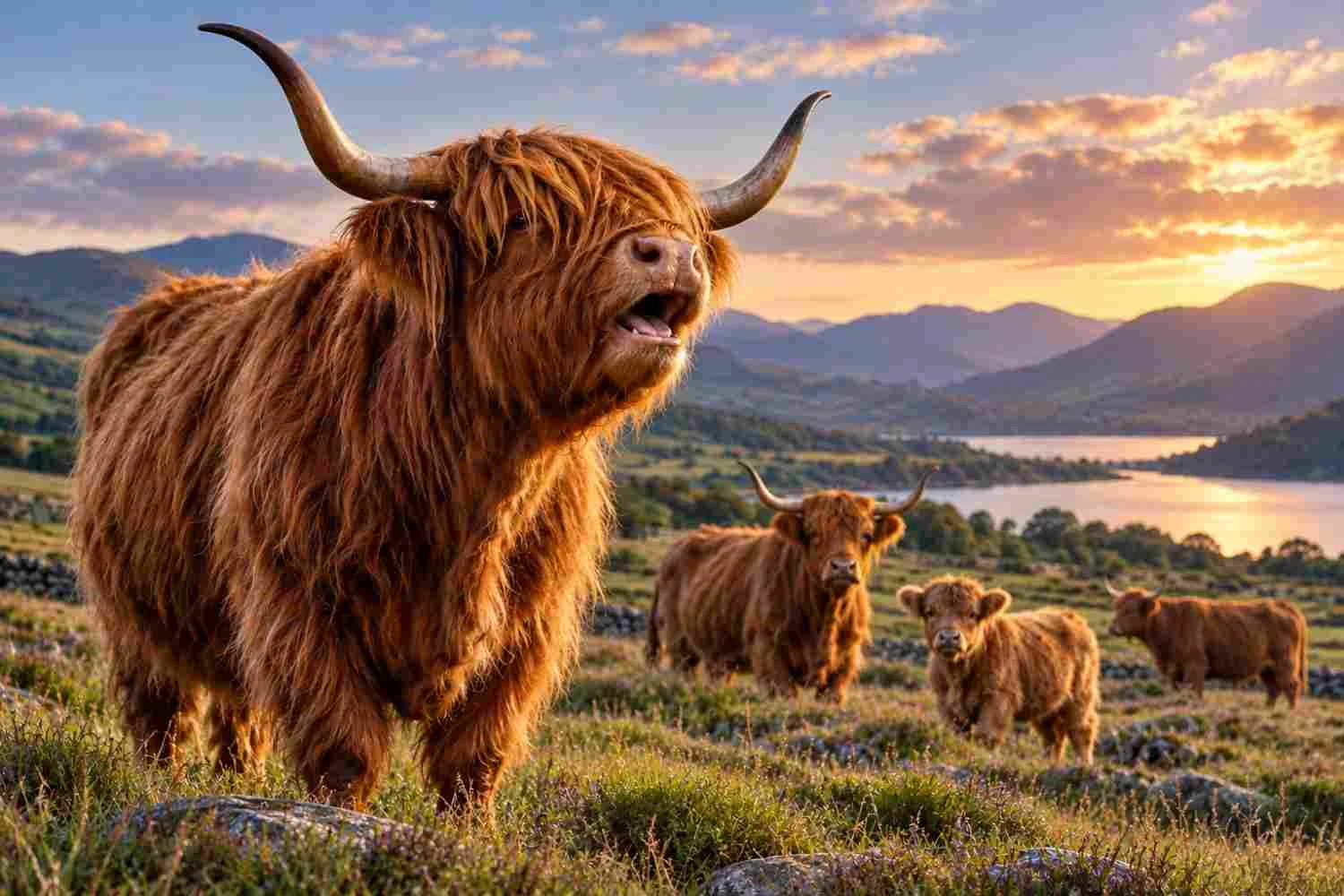
Why Do Highland Cows Moo?
Common reasons Highland cows moo include:
1. To Communicate With Other Cows
Highland cattle are social animals, and mooing can help them communicate with other members of their herd. A cow may call when other cattle are out of sight or when it is trying to reconnect with familiar herd members. The sound can help maintain contact even when the animals cannot see one another.

2. To Call Their Calves
Mother cows and their calves use vocalizations to communicate. Research has found that a mother cow’s call can differ depending on whether her calf is nearby or separated from her. Calves also produce distinctive calls when they cannot find their mothers.
3. Because They Are Hungry
Cows may moo when they are anticipating food or seeking it. These calls can be directed toward people as well as other cattle. The sound alone does not establish exactly what an animal wants, but the circumstances in which it occurs can help explain the communication.

4. To Attract a Mate
Cattle also use vocalizations during reproductive behavior. A Highland bull or cow may moo in connection with mating activity. The frequency and character of these calls can vary depending on the animal and situation.
5. To Express Distress or Discomfort
Mooing can also occur when cattle experience distress, fear, or an unfamiliar situation. Research into cattle vocal behavior has found that calls can provide information about an animal’s emotional state and circumstances. However, not every loud moo means the same thing, and a sound cannot reliably be interpreted in isolation.
Why Do Highland Cows Moo at Night?
Highland cows may moo at night for many of the same reasons they moo during the day. Their vocalizations do not stop simply because it becomes dark.

1. They Are Calling to Other Cows
A Highland cow may moo to communicate with other members of its herd when they are out of sight. Cattle use vocalizations for both nearby and longer-distance communication. These calls can occur at different times of day, including nighttime.
2. A Mother Is Calling Her Calf
Mother-calf communication is another possible reason for nighttime mooing. If a mother cow and calf are separated or cannot locate each other, they may use calls to re-establish contact. This behavior is not exclusive to Highland cattle.
3. They Are Responding to a Change in Their Surroundings
An unfamiliar sound, a change in their surroundings, or an unexpected event may prompt cattle to vocalize. The specific cause cannot be determined from the time of day alone. A Highland cow mooing after dark is not necessarily responding to anything unusual; it may simply be communicating.
4. They Are Hungry or Anticipating Food
Cattle may also vocalize when anticipating food, regardless of whether it is day or night.A cow that associates a particular sound, person, or routine with food may respond by mooing. The timing and context help distinguish this possibility from social calling.
Do Highland Cows Moo More at Night Than During the Day?
There is not enough breed-specific evidence to conclude that Highland cows generally moo more at night than during the day. Cattle vocalizations have been studied in relation to social communication, mother-calf recognition, reproductive behavior, and emotional states. However, these findings do not establish that Highland cattle have a distinctive nighttime vocalization pattern. Nighttime mooing may also be more noticeable to people because other surroundings are quieter. Hearing more mooing after dark does not necessarily mean the cattle are vocalizing more frequently.
Do Highland Calves Moo at Night?
Highland calves may moo at night for the same general reasons other calves vocalize. Research on cattle communication shows that calves use distinctive calls to communicate with their mothers. A calf may vocalize when separated from its mother or when trying to establish contact. However, the available research does not establish a special nighttime calling pattern unique to Highland calves.
Is a Highland Cow’s Moo Different From Other Cows?
Highland cows use the same broad types of vocal communication found in other domestic cattle. Their calls can vary according to the situation and the individual animal.
Research suggests that individual cattle have distinctive vocal characteristics, and mother cows and calves can recognize each other’s calls. Nevertheless, there is not enough evidence to claim that Highland cows have a unique moo simply because of their breed.
The familiar appearance of a Highland cow does not mean its vocal communication follows a completely different pattern from that of other cattle. Highland cattle also have distinctive physical abilities, and you can learn more about how fast miniature Highland cattle can run in our guide to their running spee
Final Answer
Highland cows moo to communicate with other cattle, call their calves, seek mates, and express needs or distress. At night, they may moo for these same reasons.
There is no established evidence that Highland cows have a unique nighttime moo or that they necessarily moo more after dark than other cattle. Their calls are best understood in the context in which they occur.
Ultimately, Highland cows moo both day and night because mooing is a normal part of cattle communication.